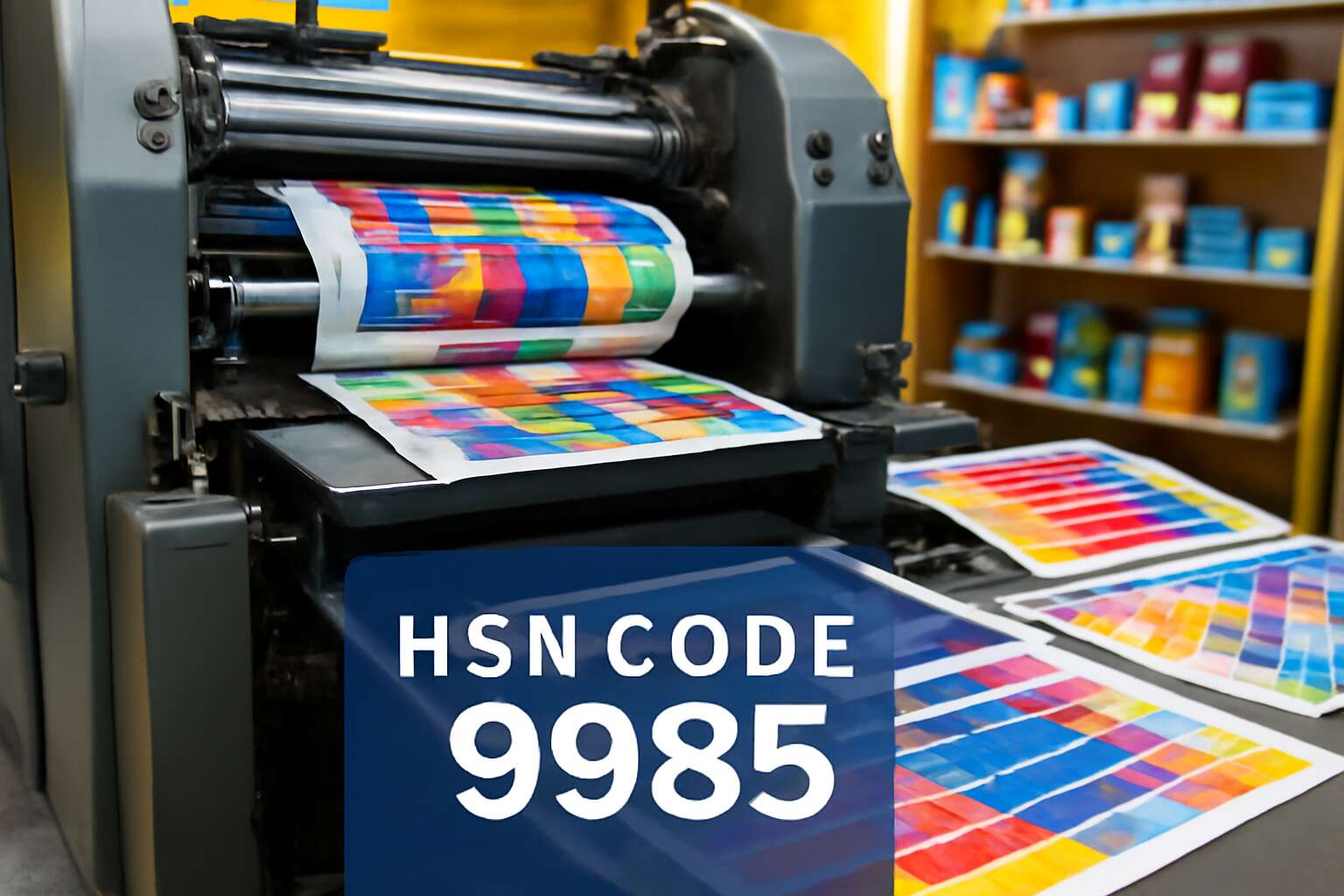
Understanding HSN codes in service industries
HSN code basics for services
Across the South African service landscape, every invoice is a quiet test of precision. A well-chosen hsn code for printing services can transform price, tax, and paperwork into a single, predictable process. ‘Codes aren’t cages—they are coordinates,’ notes a veteran tax consultant, and the point lands hard.
In service industries like printing, HSN codes provide a shared language for pricing, compliance, and cross-border dealings.
- clarity in invoicing and pricing
- consistent tax reporting
- streamlined cross-border transactions
For printing service providers in South Africa, aligning with the classification ensures smoother audits and reliable record-keeping, a quiet form of resilience in a busy market.
Classification considerations for printing and related services
“Codes aren’t cages—they are coordinates,” notes a veteran tax consultant. In South Africa’s printing sector, the right HSN code turns price, tax, and paperwork into a single, navigable map for invoices and audits.
Understanding HSN codes in service industries opens a corridor through ambiguity. For printing and related services, the hsn code for printing services acts as a shared compass, clarifying classification, pricing, and cross-border expectations.
- Classification scope: printing, design, finishing
- SARS and VAT cross-border notes
- Clear documentation for audits
For printers, alignment with classification yields smoother audits and more confident record-keeping in a bustling market.
GST compliance, invoicing, and documentation
“Codes aren’t cages—they are coordinates,” a veteran tax consultant once said. In South Africa, the right code transforms price, tax, and paperwork into a navigable map for invoices and audits.
Understanding the hsn code for printing services within service industries clarifies VAT (the South African analogue to GST) compliance, streamlines invoicing, and anchors documentation for SARS. When the code aligns with the service mix—printing, design, finishing—the VAT treatment and cross-border expectations become lucid rather than labyrinthine.
To keep audits clear, documentation should consistently reflect the service breakdown and codes:
- Invoices bearing the correct hsn code for printing services
- Full client and supplier VAT numbers, dates, and descriptions
- Notes on cross-border supply where applicable
Practical steps, tools, and best practices
South Africa’s print houses hum with precision and policy; codes are compass, not cage. A veteran tax consultant once said, “Codes aren’t cages—they are coordinates.” The hsn code for printing services matters beyond taxonomy—it aligns VAT treatment, cross-border expectations, and the paperwork that survives audits.
Understanding the code within service streams unlocks smoother invoicing and robust documentation. Practical steps include mapping each service line to the exact code, maintaining a master reference, and documenting cross-border considerations when applicable.
- Match each service line to the precise code for printing services
- Keep a single, current reference table of code descriptions
- Annotate invoices with clear service notes and dates
Tools and best practices include: a dynamic code chart updated with policy changes, standardized invoice templates, and a short description field that captures service mix to aid audits. Consistency is the lighthouse in the night of compliance.




0 Comments