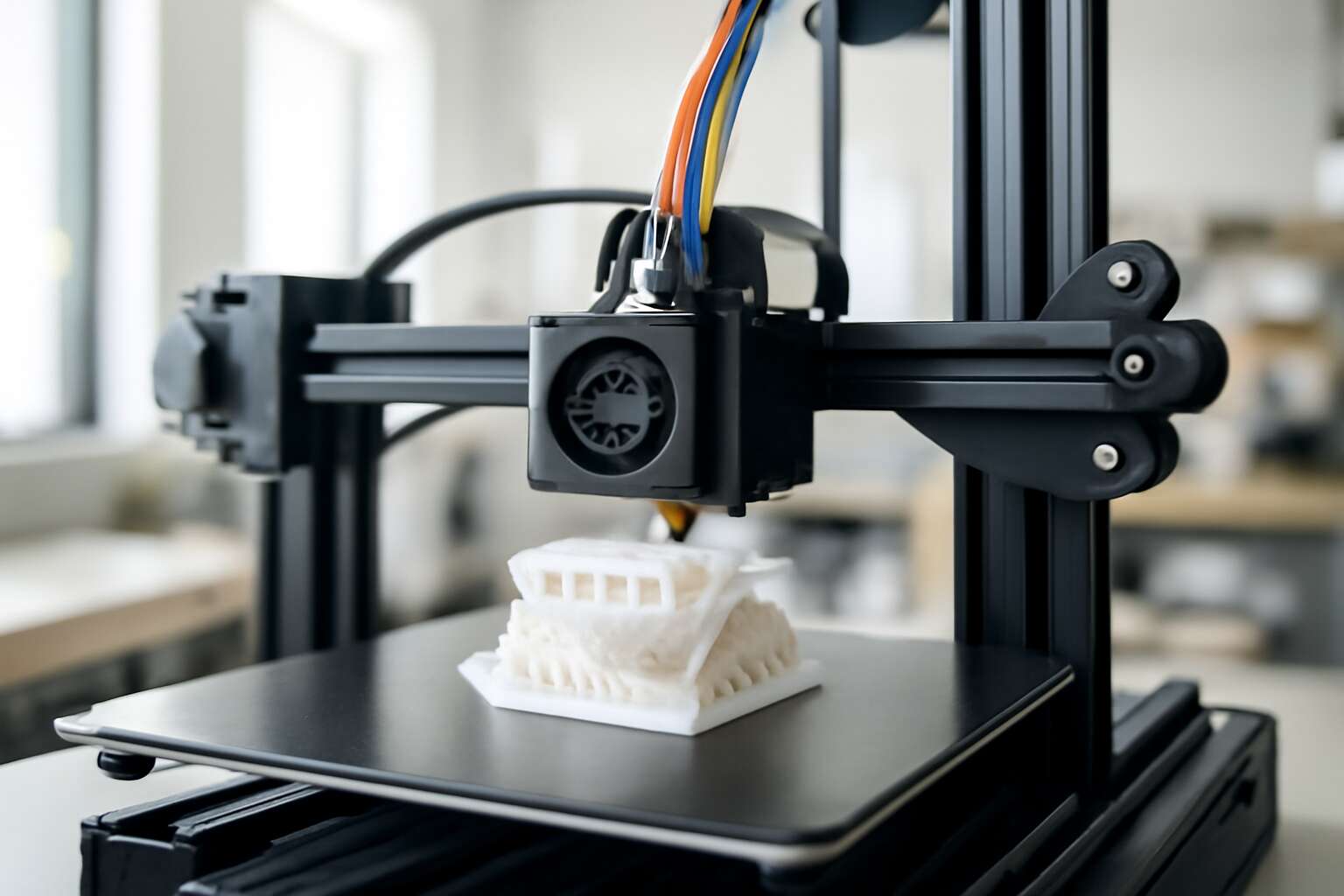
Overview of 3D Printing Services in Quezon City
What is 3D printing and how it works in practice
In Quezon City, a quiet revolution unfolds beneath the glow of resin and nylon. A 40% faster prototyping cycle has become the pulse of engineers and designers, a statistic whispered among startups chasing the next idea. 3d printing services quezon city rise like sentinels of on-demand manufacture, turning digital dreams into tangible parts with a methodical, almost ceremonial precision.
What is 3d printing and how it works in practice? A digital model is sliced into layers, and a nozzle or laser builds from plastics, resins, or metals—layer by layer—until a part emerges. In practice, the workflow is CAD → slicing → printing → post-processing, a choreography that invites quick iterations and careful fits. The offerings typically include the following capabilities:
- Prototype components in multiple materials
- End-use parts for limited runs
- Custom jigs, fixtures, and tooling
For South African readers, these services offer a bridge to global manufacturing and design ecosystems.
Popular 3D printing technologies used in Quezon City
In Quezon City, the 3D printing revolution hums with a 40% faster prototyping cycle, a statistic whispered through design studios and makerspaces. For South African readers, 3d printing services quezon city unlock cross-border prototyping paths and flexible collaboration with Philippine fabs.
Popular technologies in Quezon City include FDM for durable plastics, SLA and DLP for fine details, SLS for nylon parts, and PolyJet for multi-material builds—each serving different real-world needs.
- FDM (thermoplastics)
- SLA/DLP (resins)
- SLS (nylon)
- PolyJet (multi-material photopolymers)
These options power rapid iterations, tight tolerances, and cost-effective end-use parts, making the landscape accessible for SA markets.
Common materials and finishes for local projects
In Quezon City, a single concept becomes a tangible prototype in days, not weeks—design studios report a 40% faster path from idea to print. For South African teams, 3d printing services quezon city unlock cross-border prototyping and smooth collaboration with Philippine fabs.
Common materials and finishes for local projects include:
- FDM thermoplastics such as PLA, PETG, and ABS
- SLA/DLP resins for high-detail surfaces
- SLS nylon (PA12) for robust, functional parts
- PolyJet multi-material photopolymers to combine textures in one build
Post-processing options elevate surface quality—sanding, priming, painting, and controlled smoothing for different materials.
Whether you’re in SA or Quezon City, 3d printing services quezon city offer scalable paths from rapid prototypes to low-volume production, with predictable tolerances and finishing options.
Who uses 3D printing services in Quezon City
Quezon City is redefining rapid prototyping. In local studios, designs leap from CAD to a tangible model in days, not weeks — with reports of a 40% faster path from idea to print. For SA teams seeking cross-border collaboration, 3d printing services quezon city unlock smoother coordination with Philippine fabs.
- Entrepreneurs launching hardware startups
- Product designers validating form, fit, and function
- Educational labs and makerspaces prototyping teaching aids
From rapid prototypes to limited runs, these services offer predictable tolerances and scalable workflows. In SA or Quezon City, these services bridge imagination and manufacture.
Typical turnaround times for local projects
Quezon City’s 3D workflow moves fast. Local studios report a 40% faster path from idea to print, turning CAD concepts into tangible models in days rather than weeks!
Typical turnaround times vary by project scope. For simple prototypes, parts can be ready in 1-3 days; more complex designs with post-processing take 3-7 days; small production runs span 1-2 weeks.
- Simple prototypes: 1-3 days
- Moderate parts with finishing: 3-7 days
- Small production runs: 1-2 weeks
Several factors speed or delay. Material choice, tolerances, geometry, post-processing steps, and machine availability all play a role. For South African teams exploring cross-border collaboration, 3d printing services quezon city offer predictable workflows that align with Philippine fabs.
Choosing a 3D Printing Provider in Quezon City
Assessing service capabilities and equipment
In Quezon City, rising product ideas meet real-world constraints fast. Choosing a 3D printing provider can speed that journey. “Our prototype finally looked and felt right on the first try,” a local startup founder told us.
To assess service capabilities and equipment, look beyond the price tag. Check the technology mix, build volumes, material options, and the precision standards they promise.
- Technology mix (FDM, SLA, SLS) and build volumes
- Material options and finishes
- Measured tolerances and quality checks
- Post-processing and coating services
Ask about turnaround times, design support, and how they handle revisions. For 3d printing services quezon city, the right partner aligns capability with your schedule and budget.
Quality assurance and certifications to look for
Choosing 3d printing services quezon city providers isn’t just about price—it’s about trust, repeatability, and a prototype that survives real tests. “Our prototype finally looked and felt right on the first try,” a local startup founder told us, underscoring the value of capable partners.
Quality assurance and certifications to look for should guide the search. Seek a published tolerance map, traceable material data sheets, and documented post-processing methods. A credible shop will disclose measured tolerances, quality checks, and verification procedures that align with your design intent.
- ISO 9001 quality management
- ISO 13485 for medical devices (where applicable)
- ASTM/ISO standards for additive manufacturing
- Material data sheets and lot traceability
For South African teams evaluating 3d printing services quezon city, the right partner aligns capability with your schedule and budget.
Pricing models and value considerations
When choosing 3d printing services quezon city, price is only part of the equation, because the right partner accelerates learning and reduces risk. A South African client recently noted that a capable shop helped bypass several redesigns by clarifying costs and tolerances from the start.
Pricing models and value considerations matter. Transparent cost structures let you forecast and avoid surprises. Consider these common models:
- Fixed-price per part for defined assemblies
- Time-and-materials for rapid prototyping and revisions
- Volume discounts for larger runs or multiple parts
- Post-processing options that may be billed separately
Beyond price, weigh turnaround times, quality checks, and revision allowances. The best partner balances cost with performance, aligning with your schedule and design intent.
Reviews, referrals, and local case studies
In Quezon City’s slate-grey dawn, a machine whispers your idea into tangible form. Choosing 3d printing services quezon city is about more than the quoted price; it’s about a partner who clarifies tolerances, timelines, and the stubborn questions that keep a design up at night—something even South Africa-based engineers recognize when branching out.
To gauge fit, lean on reviews, referrals, and local case studies that illuminate a shop’s true character.
- Verified client testimonials addressing tolerances and post-processing outcomes
- Local referrals from designers or manufacturers with similar project scopes
- Concrete case studies showing problem-solving under tight deadlines
Let the evidence guide your choice, and the partnership will feel less like a transaction and more like a shared ritual of making.
Industries and Use Cases for 3D Printing in Quezon City
Prototyping for startups and product design
In Quezon City, prototyping time collapses from weeks to days, with up to 60% faster cycles. This seismic shift fuels startups and product designers as they chase faster feedback and livelier concepts. For South African designers and startups, 3d printing services quezon city offer a bridge to Asia-Pacific partnerships, turning ideas into tangible form.
Industries and use cases span creative hardware, urban planning, and experimental prototypes.
- Consumer electronics enclosures and wearable devices
- Automotive and aerospace light-weight parts
- Architectural models and urban-scale props
From concept sketch to functional prototype, design teams in Quezon City rely on fast iterations, reliable finishes, and quality control that aligns with local standards. The journey is as much about storytelling as engineering—each printed part tells a potential legend forged for a product ready to meet the market.
Architecture, engineering, and construction applications
In Quezon City, scale models printed in hours, not weeks, turn planning into public-forum demonstrations. 3d printing services quezon city have become a quiet revolution for architecture, engineering, and construction, letting teams present tactile visions, test fitments, and win approvals faster. For South African designers eyeing Asia-Pacific partnerships, these services offer a bridge to shared ambitions.
- Architectural models for stakeholder walkthroughs and urban planning reviews
- Lightweight structural prototypes and formwork components
- MEP routing and facade mockups for coordination and approvals
From concept sketch to built environment, Quezon City firms rely on fast iterations, reliable finishes, and quality control that align with local standards. 3d printing services quezon city remain the backbone of a city-scale workflow that translates drawings into demonstrable value.
Education and research use cases in local institutions
Education in Quezon City is embracing the tactile turn—concepts leap from sketch to physical model in hours, not weeks. At Ateneo de Manila and UP Diliman, students grasp theories through 3d printing services quezon city aids that speed experiments, encourage collaboration, and spark curiosity in the lab and the lecture hall.
- Anatomical and physiological models for medical and biology training
- Engineering prototypes for circuitry, materials testing, and robotics labs
- Heritage, archaeology, and architectural history artifacts for classroom study
For instructors and researchers, these tools provide reliable access to teaching aids, grant-ready prototypes, and fast iteration cycles that keep project timelines on track.
Medical and healthcare applications in the city
Quezon City’s medical scene is quietly embracing precision over guesswork. Hospitals and teaching centers lean on rapid, patient-specific tools to demystify anatomy and accelerate planning. The payoff is tangible: smoother preoperative workflows, reduced cycle times, and patients who recover with fewer surprises.
Key healthcare use cases in the city include:
- Patient-specific anatomical models for surgical planning
- Custom surgical guides and jigs for precision
- Tailored prosthetics, orthotics, and dental devices
- Medical training simulators and phantoms
South African readers will appreciate that 3d printing services quezon city aren’t merely gadgets; they’re catalysts for safer surgeries, faster training, and personalized care. As demand grows, clinics across the city partner with local suppliers—raising a tempo that even distant markets can’t ignore.
Small business and consumer product manufacturing in QC
Quezon City’s entrepreneurial heartbeat is powered by agile makers who treat product development like a sprint. In this landscape, 3d printing services quezon city turn rough sketches into tangible parts in days, not weeks. South African readers will recognize the same lean thinking: faster iteration, lower upfront costs, and local support that actually answers the phone.
Use cases abound for small business and consumer product manufacturing in QC:
- Pilot runs and functional testing of new gadgets
- Custom enclosures, housings, and cosmetic parts
- Low-volume production of branded accessories and gifts
- On-demand spare parts to minimize downtime
- Marketing models, display pieces, and packaging dummies
Local shops lean into partnerships with nearby suppliers to shorten lead times and keep IP close to home. This approach helps brands test, tweak, and triumph without breaking the bank.
Technical Considerations and Best Practices for QC 3D Printing
Design for 3D printing and proper file preparation
Print quality begins with intent. In the realm of 3d printing services quezon city, even the tiniest misstep echoes through the build. For QC-focused design, I learn to respect dimensional accuracy, straight-line tolerances, and robust wall thickness—delamination and warping refuse to be the default. File preparation and model integrity aren’t afterthoughts—we are the passport to reliable prototypes and production runs.
Consider these best practices during file prep and design checks:
- Ensure a manifold, watertight STL or STEP export with consistent units (millimeters).
- Design with practical tolerances for your chosen material and printer resolution.
- Orient parts to optimize strength and minimize support material; include labeled axes and scale markers for QC.
- Provide clear annotations or a simple BOM for color, finish, and post-processing steps.
When aligned with these checks, you’ll hand off cleanly to 3d printing services quezon city.
Choosing materials: plastics, resins, metals
Technical considerations for QC 3D printing hinge on material behavior and process limits. For South Africa’s makers evaluating 3d printing services quezon city, you balance dimensional accuracy, surface quality, and post-processing demands. Think of three material families sufficing most jobs:
- Plastics — tough, economical, good for complex geometries
- Resins — high detail, rigid or flexible options, post-cure variability
- Metals — strength and heat resistance, costly but production-ready
For QC, pragmatic tolerances arise from material behavior and printer capabilities, while part orientation tends to bolster strength and minimize supports; clear finish expectations and post-processing notes complete the project documentation. This keeps the handoff to local providers smooth and predictable, with minimal back-and-forth.
Post-processing, finishing, and assembly
QC hinges on material behavior and printer limits; tolerances are pragmatic, not heroic. For South Africa’s makers evaluating 3d printing services quezon city for their local projects, part orientation tends to bolster strength and minimize supports, while finish expectations keep everyone honest and on the same page.
Post-processing varies by material: plastics smooth over roughness with gentle sanding, resins respond to controlled cure and polishing, metals tolerate extra finishing but at a price. Set finish goals early and lock them into the project file so providers aren’t guessing.
Finally, align finish, assembly, and QA as a bundle: tolerance maps, surface spec, and notes. A clear handoff short-circuits back-and-forth and makes the handover smooth, turning local projects into predictable, well-documented collaborations.
Sustainability and waste reduction in QC 3D printing
In a world where design drives responsibility, sustainability is a design constraint that sharpens thinking. A seasoned maker once said, “Sustainability is not a burden but a design constraint that sparks smarter ideas.” For South African makers evaluating remote partners, 3d printing services quezon city stands as a case study in balancing speed and stewardship.
Technical considerations for QC 3D printing center on material provenance, printer calibration, and a preference for designs that minimize waste. Transparency about resin and plastic waste streams, plus the ability to re-use supports and endpoints, help keep projects fiscally and environmentally sane.
- Design for material efficiency and nesting to minimize supports
- End-of-life planning and waste diversion
- Energy use awareness and equipment downtime management
When finish, assembly, and QA are viewed as a single continuum, sustainability becomes part of the package—an ethos that translates across borders and keeps local collaborations predictable and responsible.
DPI, tolerances, and part quality expectations
Technical considerations for QC 3D printing hinge on printer accuracy, material provenance, and a bias toward waste-minimizing design. DPI, while rooted in display-like terms, maps to layer height and XY precision—the finer the DPI, the smoother the contour. Tolerances should be tied to intended function and process; for many FFF parts a starting target of ±0.2 mm is reasonable, with resin systems enabling tighter control. For 3d printing services quezon city, aligning calibration, material traceability, and a small test artifact sets a reliable baseline!
- Calibrate layer height and XY resolution
- Define feature tolerances by function
- Perform dimensional and surface QA post-print
End-to-end quality is a continuum, where DPI, tolerances, and inspection milestones shape predictable outcomes for clients of 3d printing services quezon city.
Troubleshooting common printing issues
Technical considerations for QC 3D printing hinge on printer accuracy, material provenance, and a bias toward waste minimization. DPI maps to layer height and XY precision—the finer the DPI, the smoother the contour. For 3d printing services quezon city, calibrate layer height, define tolerances by function, and QA post-print. Consider it the truth serum of fabrication.
- Calibrate layer height and XY resolution
- Define feature tolerances by function
- QA post-print
End-to-end quality is a continuum; common issues include under-extrusion, warping, and adhesion faults. Troubleshooting relies on stable calibration, verified material provenance, and a small test artifact to reveal hidden sins.
- Under-extrusion and layer gaps
- Warping and bed adhesion challenges
- Moisture uptake and resin separation
End-to-end QA aligns calibration, material traceability, and a test artifact baseline. Across South Africa, disciplined QC keeps projects predictable for clients.

0 Comments